Deter Deer Naturally with Coyote Urine

Deer are one of the most if not the most prevalent garden pests  on the North American continent. In the winter time, deer try to eat bark and shrubbery from expensive ornamental trees and bushes. In the spring and summer, they try to make a feast of tender seedlings and mature garden produce. Depending on what part of the country you live in, the battle can be unending.deer damage

Up here in rural Maine, we mostly have to worry about deer bothering our summer vegetable gardens. We only have a very short growing season and nothing is more devastating to the avid gardener than to go out to the vegetable patch one morning and see little gnawed off nubs where lush greenery used to be. I know we certainly get a lot of requests from gardeners and landscapers alike for help in this area.  In fact way back in 1986, when predatorpee was born, deer were one of the first problem pests that our products were used for. What product is that? Well, as you may know here at predatorpee.com, we rely heavily on the predator-prey principle. It is a concept that makes lots of sense and has proven to be effective.

So, if we have a deer(the prey), we need to figure out the predator. A little research and the answer presents: “In Southern Canada and several states in the United States, including Michigan, Virginia, South Carolina and Pennsylvania, the most common predators of white-tailed deer are coyotes, followed by bobcats. Coyotes that used to live primarily in the American West have extended their territory ranges and have moved eastward. Since then, coyotes have played a major role in reducing the deer population, as they specifically attack fawns born in spring.” https://www.reference.com/pets-animals/natural-enemies-deer-d165cdd5ebaf0a10

This information combined with field tests and customer feedback have led us to conclude that Coyote Urine is the answer to the deer problem. But, you say, “there are no coyotes anywhere near where I live, why would that scare a deer?” Good question. The answer is that the fear of a predator is instinctual(thus hardwired in) and not dependent on actual proximity or exposure to said animal. But, you don’t have to take my word for it. The comments below are from actual predatorpee customers.

“I have been a happy customer for eight years now and continue to buy your product and tell my neighbors about it.” Kris

“I have ordered from you before and the product works well. Keeps the deer out of my garden.” Frank

“Thank you. I appreciate your help. BTW, your product has worked extremely well for me last season, and so far this Spring. The uneaten by deer crocuses are a testament to the efficacy of CoyotePee.” Reynolds

Don’t wait! Be prepared for the growing season. Click here for coyote pee and here for application instructions.

Until I find more words …The PeeMan

How to “OutFox” Destructive Skunks

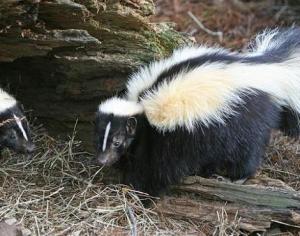
I don’t know about in other places, but around here the distinct aroma of skunk spray is a sure sign that Spring is on its way. Unfortunately, here in Maine, Old Man Winter has decided he is not done with us yet, so the skunks have gone back to hiding for a while. But, surely they are out and about in other places in the world. So, we know that the scent of their spray is noxious, but what other problems do skunks cause?

“Shallow holes in the ground, surrounded by a ring of loosened soil”

“Skunks are often the cause of these clues. The soil disruption happens overnight because skunks are nocturnal feeders. The hole is approximately the size of a skunk nose. The skunk presses its nose to the soil and digs with its long, front claws. Skunky knows that just below the surface is a protein-rich treat, just waiting to be harvested. There can be so many holes that they coalesce into an area the looks like it has been tilled.” http://msue.anr.msu.edu/news/whos_that_digging_in_my_yard_skunks_raccoons_or_moles

Well, here at predatorpee.com, we approach a lot of our problem pests using the predator-prey principle. It is a concept that makes lots of sense and has proven to be effective. So, if we have a skunk(the prey), we need to figure out the predator. A little research and the answer presents:  “While the exact number of species that prey on skunks is unknown, red foxescougarscoyotes and domestic dogs are among them.” So, best way to prevent skunk damage . . .”Outfox” them with 100% FoxPee. But, you don’t have to take my word for it, customers have been using it with success for years, just read below:

“I have used your products (for skunks) for at least the past 6 years…and they work!”

Wally – Salem, OR

“This stuff works GREAT at keeping skunks away from our property and pets.”

Brian – Peabody, MA

“I live in San Diego, Cal. and we have so many skunks this year. I’ve called all over town asking how to get rid of them. Everyone said to get a trap and take them to the country to release them. I’m in my 70’s and am not about to trap a skunk! My son in Seattle, Wash. sent me some Fox urine. He said everyone up there uses it but down here they laughed at me. However, it has worked for 3 weeks, but now they’re back. Help! How can I order more ?”

E. H

To purchase 100% FoxPee click here. For application instructions, click here.

Enjoy your day, especially if Spring(and skunks)have arrived!

Until I find more words . . .The PeeMan

Coyote Urine Curbs ‘Coon Chaos

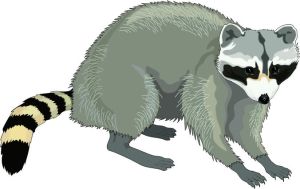
Raccoonsraccoon are arguably one of the most annoying pests on the North American continent. We certainly get a lot of requests for help from exasperated homeowners whose garbage and gardens have become a night time paradise for the striped bandits. What is to do be done? Well, here at predatorpee.com, we approach a lot of our problem pests using the predator-prey principle. It is a concept that makes lots of sense and has proven to be effective. So, if we have a raccoon(the prey), we need to figure out the predator. A little research and the answer presents: “Predators of adult raccoon include bobcatscoyotescougars and domestic dogs. Young raccoons are preyed upon by eagles and large owls.” https://www.reference.com/pets-animals/predators-raccoons-2c3866e1230ab507

This information combined with field tests and customer feedback have led us to conclude that Coyote Urine is the answer to the raccoon problem. But, you say, “there are no coyotes anywhere near where I live, why would that scare a raccoon?” Good question. The answer is that the fear of a predator is instinctual(thus hardwired in) and not dependent on actual proximity or exposure to said animal. But, you don’t have to take my word for it. The comments below are from actual predatorpee customers.

“Hi — about two months ago I wrote to you regarding a problem I’ve long had with ‘coons on my roof. I live in the florida keys and I wasn’t sure if coyote pee would work as I’m sure my ‘coons have never seen a coyote. You said it was genetic response to the smell and should work. It did. So, it’s time I got my predator pee last week and finally set it up on the weekend! Works great. Every night the raccoons would clean out the bird feeder. I even had baffle to stop the squrrels but the raccoons would get up on the baffle somehow and still clean out the seed! We haven’t seen the raccoons for the last few nights…” Robert

“Can’t believe it! Two nights after putting out your product, I was able to leave my bird feeders up all night…Thank you so much for such a great product. I am one happy customer!” Tonya

I’ve been an extremely satisfied customer for quite a few years. I haven’t lost a fish in over 4 years (to raccoons) because I use the coyote pee regularly….thanks for providing a humane way to protect my pond.” RL

So, raccoons got you up at night? Get some 100% CoyotePee and rest easy. Click here to purchase. For application instructions, click here.

Until I find more words. . .The PeeMan


Of Mice and Lawyers – more wire chewing woes

Well, I have been trying to tell people about this problem for a while now. It seems that some consumers are fed up and have turned to the law to protest the use of tasty soy based wiring in their vehicles. . .

CALIFORNIA — Do you have warning lights and costly car repairs? Rodent damage could be the culprit behind your next break down. A class action lawsuit claims the type of plastic used in new cars could be attracting vermin that eat the wires.

“I never could figure out where the stuff came from until I saw the rat,” said Barbara Olm. On more than one occasion a tiny hitch hiker made a meal out of the wiring in Olm’s 2012 Lexus.

The 84-year-old poisoned one rat in her car, but not before the rodent cause more than $400 in damage. “The mechanic found a ground wire and coolant wire eaten by rats,” Olm said. . . . .

Chewed up insulation is a cheap fix but wiring damage can be costly. “I have seen a couple in the $2000 range,” Campanili said, and damage is not covered under warrantee. University Honda can’t explain what’s attracts rodents to vehicles, but attorney Brian Kabateck can. “The plastic coating around the wires is made of soy,” Kabateck said. “I am not a rat expert, but soy must be delicious to rats.”

“While we cannot comment on this litigation, we can say that rodent damage to vehicle wiring occurs across the industry, and the issue is not brand- or model-specific.” Victor Vanov Corporate Communications Toyota Motor North America

http://www.wcpo.com/money/consumer/dont-waste-your-money/lawsuit-claims-car-wiring-too-tasty-to-rodents


Car owners across the country are getting into their cars these days, turning the key and finding their engine won’t start. The reason may be hard to believe: an animal ate their car’s wiring.

Now, a class action lawsuit claims millions of Toyota cars, trucks and SUVs contain wiring that is attractive to animals like squirrels and mice. Honda settled a similar suit a few years ago.

Thousands of car owners in recent years have ended up like Woody and Mary Herald, who two years ago showed us how animals chewed through their car’s wiring. “On the ground we found this connector, with six inches of wire on either end of it, that the varmints had chewed into completely,” Woody Herald said.

This new suit claims Toyota uses soy-based wiring, which is environmentally friendly but tasty to animals. . . . . .

http://fox17online.com/2017/02/08/do-animals-think-your-car-wiring-is-tasty/

While taking on the auto giants may be an option, it is likely to take lots of time before something is resolved. In the mean time, what is to be done for the average person who is stuck with a rodent taking up residence in their engine and feasting on their car wires?

 “If you see any evidence of rodents under the hood of your car, you should buy a 384250_f1024repellent immediately, before they cause  hundreds of dollars of damage.  That way, you don’t waste your money.”

 http://fox17online.com/2017/02/08/do-animals-think-your-car-wiring-is-tasty/

Well, I have never been one to bring up a problem without offering a solution.   Our PeeShots are perfect for this application. They come in an 8 pack and are “Pee-Loaded” with PredatorPee. Remove the lids and place the PeeShots near each tire and in engine compartment or other target areas in the vehicle. Remove before driving. Choose BobcatPeeShots for mice, CoyotePeeShots for rats and ‘coons, FoxPeeShots for squirrels, and WolfPeeShots for domestic and feral cats.

Problem: Predatory Hawks – Solution: Hawk Stopper

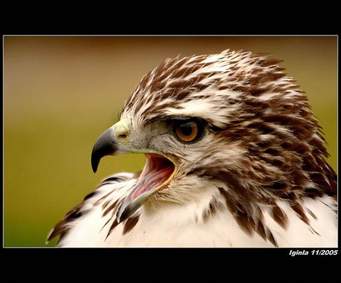
“. . .as a backyard chicken owner I hated to see my chickens killed. I wanted to know exactly how to protect chickens from hawks. The red-tailed hawk is one of three species in the United States known as a chicken hawk. The other two are sharp shinned and Cooper’s hawks.” How to protect chickens from hawks Pam Freeman

hawkUnfortunately, this chicken keeper’s experience is all too common. Hawks are a real threat to free range poultry across the country and with a rise in the number of backyard chickens, it is a problem begging for a solution.  Some people resort to shooting these birds right out of the sky. Well, aside from it being needless killing, this is also illegal without proper permitting.

“ All hawks and owls are federally protected under the Migratory Bird Treaty Act (16 USC, 703-711). These laws strictly prohibit the capture, killing, or possession of hawks or owls without special permit.”

In addition to this fact, “No repellents or toxicants are registered or recommended for controlling hawk or owl damage. In years past, raptors were killed by putting out carcasses laced with poison. This practice led to the indiscriminate killing of many nontarget animals. Concerns for human safety also prompted the banning of toxicants for raptor control.”(http://icwdm.org/handbook/birds/HawksOwls.asp)

So, what is a chicken keeper faced with this ongoing threat to do?

Well, that is what the creative folks at predatorpee.com have been researching for the past few years. And the result of those efforts have produced the Hawk Stopper – visual deflection net.

The concept was first used to protect salt-water salmon farms in the Gulf of Maine from predatory sea birds. Hawk Stopper now uses the same principles of visual deflection to protect free-range chickens, turkeys and ducks as well as koi, catfish and other inland pond or farm-raised fish.
How does Hawk Stopper work? When you call someone eagle eye, it’s because they have sharp eyesight. But in reality, no human’s eyesight comes even close to the visual capabilities of predatory raptors like hawks, eagles and falcons. These birds see about 8 times better than humans – they see things sharper and from a greater distance than anything we can imagine. Hawk Stopper uses the hawks’ incredible eyesight to turn an easy-to-handle, inexpensive, lightweight 1500 square foot mesh into a formidable and impenetrable barrier. What we see as almost invisible looks to hawk like jail cell door!

A peaceful, easy solution that will keep your hens safe and not harm the hawks either. It’s a win-win.


Ask the PeeMan: Raucous Raccoons?

It has been a loong time. Summer slump – but the air is cooling and it is time for the PeeMan to get bloggin’ again! We will start with a tidbit from my PeeMail . . .

Question:

Hello,

> I have raccoons frequently pooing in my backyard and especially on my deck. I have kids. How safe is coyote urine? Can it be sprayed on decks? Can it also be sprayed on grass? How do I apply it and how often should I apply it? My backyard is roughly 45 x 30 feet. Raccoon

> How long does it take to ship coyote urine to Canada?  I live in . . .  I understand shipping is free.

> Thanks

Answer:

Figure about a week to Canada – shipping is quick, but customs works on their own timeframe. For a deck, use with our ScentTags or 33Day Dispensers – I wouldn’t recommend drinking PredatorPee but it is non-toxic.

KJ The PeeMan

Urine for Human Pests? Nope – Skunk’Um!

My wife thinks that I make stuff up. She thinks that some of my ideas are only great in my mind. Well, granted, a few of my ideas haven’t panned out exactly as I may have hoped(that’s for another post) but a question I received from a clever customer this week confirms that the invention of Skunk’Um is a great solution for a real problem. The fact that we have sold hundreds of bottles since it launched doesn’t hurt either. Without further ado . . . it is Ask The PeeMan Wednesday!

Q. I am curious which is the absolute worst smelling urine of all the ones you sell? I am looking for something to spray/place outside my bedroom window to deter people from loitering so I am able to get some sleep at night so I guess my predator would be human.
> Thank you, Amy


A. Amy,

Sorry for the delay – its our crazy season. See Skunk’um – for annoying people at this link: http://www.predatorpeestore.com/skunk-um.html

KJ The PeeMan

As you can see from my response, I have been a little delinquent in responding to my peemail lately. Shipping pee during the busy season and keeping up with the summer farm chores has kept me away my keyboard. Never fear, if you ask the PeeMan a question he will answer – just not as quickly in May, June and July!

Until I find more words . . .The PeeMan


Ask the PeeMan: California Skunks

Hi there, we live just outside of San Diego, California in a little town.  We used to smell skunks once in a while but it’s getting very bad lately.  I came across your website and I’m a little confused which predator pee is best for skunks – would you recommend the fox pee granules?   We have some plants clustered together and it seems like they like to go in there, could we just spread the granules in that area and call it good?   Although it says the granules are recommended for burrowing creatures, should they work for skunks too.  How often do you think we would need to reapply?  Anyway, any guidance would be appreciated.

Thanks!
Shelly


skunk6

Shelly,

Yes FoxPee Granules would work fine – skunks like to dig for grubs etc. Reapply after rain – which I understand is not so frequent in So California. Here is the link:

Ask the PeeMan: HawkStopper Questions

Wednesday is Ask the PeeMan day!

Those of you who are familiar with the blog will  remember that a couple of months ago, my company launched the HawkStopper product. For so many years, we had people asking if we had anything for birds. Well, birds don’t have much of a sense of smell, so predatorpee wasn’t the solution for them. Now predatory birds have to think twice about attacking chickens because of HawkStopper – visual deflection net.

Q. What is it made of and what is its life span?  Also, what are the length/width dimensions of the 1500 sq ft package?  Thanks! Susan


A.Susan,
HawkStopper is made of three strands of white nylon filaments twisted together to hawkstopper-visual-deflection-logo-900form a single strand of twine with a bonded coating that keeps the netting white and flexible.  Should last at least 5 years. Here is the link:
http://www.predatorpeestore.com/hawk-stopper.html
KJ The PeeMan

Rodents Cause More Than £370m Of Damage Annually To Cars in the UK Alone

Guest Blogger Toby Bateson

Rats are renowned for being highly destructive. They are well known to damage food, clothing and buildings. roof-rat-961499_640They also target machines and computers, including the wiring in your car engine. Repairs can be expensive, sometimes an entire car may need rewiring as a result. For a high end sports car or SUV this can be in the region of £7000.

car-482683_640Research by Hammer Technologies has shown that an amazing 9% of car users in the UK have had their car damaged by rodents at some point. Damage found included chewed pipes, bitten plastic cowling and broken wires and pipes.

The reason they tend to do this is thought to be because their teeth grow constantly throughout their lives. They chew on hard materials such as steel wires in order to wear their teeth down. The warm engines of cars are also thought to attract rats looking for a home.

The survey demonstrated that the average cost of repair came to £300. The total cost of rat damage to cars every year was calculated to be an amazing £377,410,90.

The way this figure was found, if you are interested, is as follows.

In 2013 31 million cars were on the road in the UK, according to official Department of Transport figures. The survey showed an average of 1.86 rat damage events for each person who was affected. Eight of the 33 episodes reported occurred in the previous year.

9% of those surveyed had suffered rodent damage to their cars. The following sum calculates the total cost of the damage. 9% * 31 million cars * £300 * 1.86 episodes per person * (8÷33) episodes in the last year = £377,410,909.

If you have a car make sure you do everything you can to protect yourself. The PeeMan has products which will protect your car from rat damage.  Visit the store  now to get the protection you need.