
Next up in our series on backyard chicken predators is the noxious skunk. While they might not be the first predatory threat to your flock that comes to mind, nevertheless, if given the chance, a skunk will eat eggs, kill chicks and even occasionally attack full grown poultry. 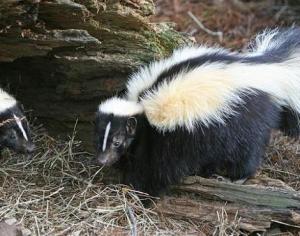
Obviously, the easiest way to tell if a skunk is around your coop is to follow your nose. If you notice persistent skunk essence over an extended period of time, chances are you have a skunk in residence. But, if you are still not sure, you can also look for tracks. The tracks can be difficult to distinguish from those of a raccoon but if you are a gifted tracker, you can easily spot the difference. 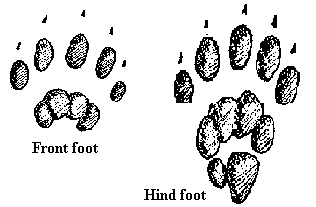 If you really want to be thorough, an examination of skunk scat will usually reveal lots of insect parts. If your coop has been subject to attack by a skunk, you would expect to find eggs opened up on one end and the contents consumed or if an actual bird were attacked the neck would be opened up and perhaps the head eaten.
http://www.almanac.com/pest/skunks http://www.raising-chickens.org/chicken-predators.html
Once you have definitely identified the threat, it is time to take action. Skunks will not usually break through coop confines like some other aggressive predators, but if given an opening, they will take it. So, it is essential to make sure fencing and coop confines are intact and also that any areas where skunks could dig underneath are properly sealed. Once the coop is secure, then it is time to employ a deterrent. Enter fox urine. What? Fox Urine? How? It might not be the first thing you think of but, a fox is one of the most common skunk predators. Skunks fear foxes, they sense a fox is present because of the urine, and they leave your chickens, chicks and eggs alone – it is as simple as that.
Identify, shore up fencing and walls, set up a pee-rimeter with 100% fox urine, and rest easy.
Until I find more words. . .The PeeMan
 Rats are a nuisance, to say the least, and in the worst circumstances a great danger to chicks, eggs, even to hens themselves. The danger these rodents pose comes not only from direct attack and carnage but also from often disease ridden droppings that can remain a threat long after the actual rats have gone.
 The first predator we will look at will be the masked bandit commonly known as raccoon, or scientifically speaking- procyon loter. This omnivorous creature can range in size from 23.5 in. to 37.5 in. and 4 to 23 lbs. In the wild, the raccoon lives an average of 2-3 years. If near water, they like to eat frogs and crayfish and other aquatic treats. On land, they will grab mice, insects and most applicably to us tasty eggs and sometimes the poultry themselves.

 ok, so admittedly i don’t know much about koi. I stocked my pond with some salmon last year but drought killed them off, so I am far from an expert on raising fish. So, I am going to use information from others who know more about the popular ornamental carp. Apparently these fish can be pretty valuable:


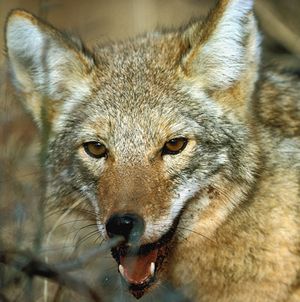 Ok, so they are breeding, steer clear, what’s the big deal? The big deal is that every day reports surface of coyotes attacking, maiming and even killing small dogs and other small domestic pets. Here are links to just a few stories from the past month:
 Words from The Peeman